From Vision to Reality: How One Developer Built Skardu's First Certified Eco-Resort Using Modular Construction
When Hassan Malik decided to build a luxury resort in Skardu, he chose modular construction. The result: a 12-unit eco-resort that was completed in 120 days, minimized environmental impact, and achieved carbon-neutral operations. Here's how he did it.
From Vision to Reality: How One Developer Built Skardu's First Certified Eco-Resort Using Modular Construction
The Opportunity and the Challenge
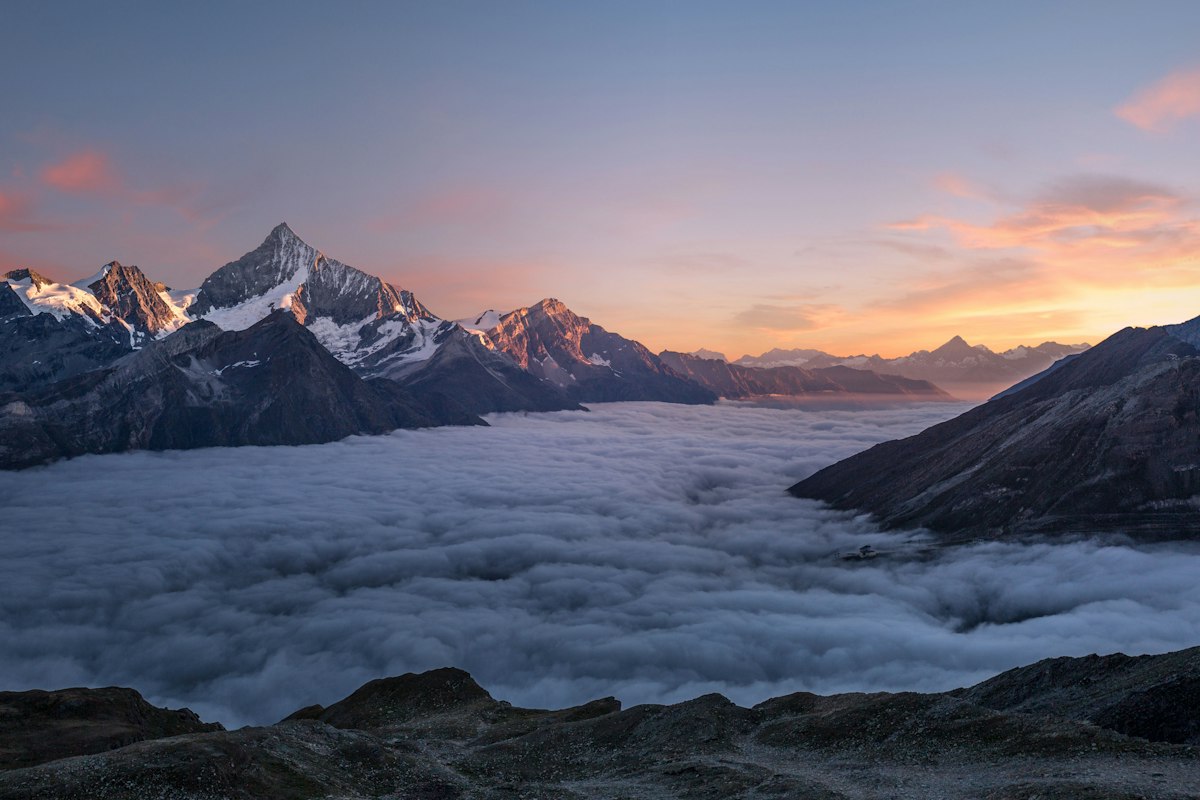
Hassan Malik had owned a premium plot in Skardu for three years—eight acres overlooking the Indus River, with the Karakoram peaks as the backdrop. It was the kind of land that tour operators dream about. But Hassan wasn't a hotelier. He was an engineer by training, a real estate investor by profession, and someone who cared deeply about environmental stewardship.
"I knew the plot was special," Hassan recalls. "But I also knew that if I built the conventional way—pouring concrete, clearing large areas, bringing in heavy machinery—I'd be destroying the very thing that made the land valuable in the first place."
That's when he discovered ESpace.
The Design Phase: From Concept to Blueprint
What attracted Hassan to modular construction was the design-first approach. Unlike conventional development, which often proceeds with site clearing first and design adaptation second, ESpace begins with detailed site assessment and architectural planning.
"The team came out for a full day," Hassan says. "They mapped the topography, identified water sources, assessed sun exposure, and checked sightlines. They weren't just looking at the plot—they were asking how to work with it rather than against it."
The result was a resort design that followed the natural contours of the land. Twelve units were positioned to minimize site disturbance. Access roads were designed along existing drainage patterns. A central pavilion was placed at the highest point, taking advantage of natural ventilation and views without requiring any foundation excavation.
"What impressed me most was the honesty," Hassan reflects. "They said upfront: your plot can sustainably support 12 units at this density, with this impact. More than that, and you're compromising the product. I trusted that assessment."
The Construction Phase: Speed Without Compromise
In April 2024, ESpace began unit fabrication while Hassan completed site preparation and utility infrastructure. By mid-May, the first units arrived in Skardu.
"That was when the real advantage became visible," Hassan says. "The actual assembly time was remarkably fast. We went from bare site to fully installed, furnished, and operational units in about 120 days. With conventional construction in Skardu, that same timeline would be impossible—you'd still be dealing with foundation curing."
More importantly, because the units arrived complete, there was minimal site waste. Material handling was clean. The construction footprint was controlled. Local craftsmen were brought in for landscaping and finishing work, creating employment while respecting the natural aesthetic.
"We used local stone for terracing, native plantings, and materials that felt indigenous to Skardu," Hassan explains. "The units themselves are modern, but they sit in the landscape like they belong there."
The Sustainability Angle: More Than Marketing
When Hassan speaks about his resort's environmental approach, it's clear this wasn't greenwashing.
"I brought in a sustainability consultant early on," he says. "We installed a proprietary greywater recycling system, rainwater harvesting, and solar arrays on south-facing slopes where they're invisible from the main viewpoints. Heating is geothermal-assisted. We're aiming for carbon-neutral operations within two years."
The modular construction method itself contributed significantly to these outcomes:
- Reduced Material Waste: Factory-precision manufacturing meant minimal cutting, spillage, or overordering. Offcuts were recycled.
- Lower Transportation Impact: Twelve complete units in fewer truck journeys than the steel, concrete, and timber that would have been shipped for conventional construction.
- Minimal Site Disturbance: No heavy machinery wear on soil. No large excavation requiring aggregate extraction. The natural watershed remains intact.
- Long-term Durability: The structural quality means the resort won't require major renovation or reconstruction for decades, avoiding the embodied carbon of future rebuilds.
"The environmental benefit isn't just in the construction method," Hassan points out. "It's in building something durable that guests will value and maintain properly. A cheaply built resort that falls apart in ten years and gets demolished is far worse environmentally than something built to last fifty years."
The Market Response
Since opening in January 2025, Hassan's resort—Indus Valley Sanctuary—has operated at over 70% occupancy in its first season, with significantly higher nightly rates than comparable conventional resorts in the region.
"Our guests are willing to pay more precisely because the product is different," Hassan observes. "They're not paying for luxury in the traditional sense—marble and gold fixtures. They're paying to stay in a place that feels authentic, doesn't detract from the environment, and where the owner clearly cares about doing things right."
Bookings are concentrated among international travellers and high-income domestic visitors specifically seeking eco-conscious accommodation. Hassan is already planning a second phase.
The Larger Lesson
When asked what he'd tell other developers considering Skardu or similar mountain regions, Hassan is direct:
"Modular construction isn't a cost-cutting measure. It's a quality and sustainability advantage. Yes, per-unit costs are comparable to good conventional building. But the speed, the environmental control, the design integrity, and the durability—that's where the real value lies."
"And frankly, the market is beginning to understand that distinction. The days of quantity-over-quality resort development in Skardu are passing. Guests are choosier. They're willing to travel further for the right experience. The developers who build that experience—thoughtfully, sustainably, with quality—will capture the market."
Hassan is already there.
Indus Valley Sanctuary is currently accepting bookings for the 2025-26 season. For information, visit www.indusvalleysanctuary.pk or contact the ESpace team for developer consultations on similar projects across Pakistan's mountain regions.